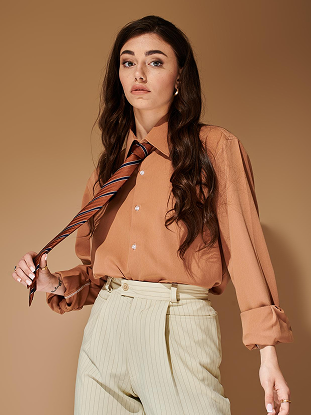
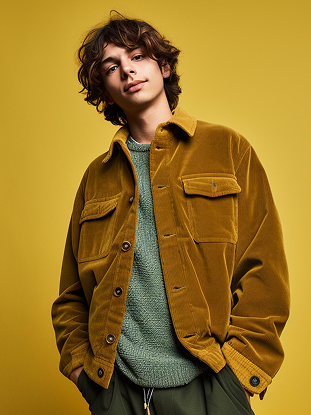
A house style is more than a set of rules. It is a living, breathing expression of a publication's values, its aesthetic sensibility, and its understanding of the world it speaks to. Over the course of a decade, a house style evolves — shaped by the editors who champion it, the cultural moments that challenge it, and the readers who ultimately define its relevance. To look back on ten years of editing fashion is to trace not just the arc of a single publication, but the broader story of how we have thought about style, identity, and beauty in a rapidly changing world.
When we first began to articulate what our house style meant, the conversation was largely about aesthetics. We knew the kinds of images we wanted to make — clean, considered, emotionally resonant — and we knew the kinds of stories we wanted to tell. We were drawn to the quiet confidence of understated dressing, to the beauty of well-made things, to the idea that true style is less about following trends and more about developing a deeply personal relationship with clothes. These instincts have remained constant even as everything else around us has shifted and evolved.
The first few years were defined by a process of refinement. We were learning, as all young publications do, what we were and what we were not. We made bold choices and occasionally got them wrong. We experimented with formats, with photographers, with the kinds of subjects we chose to profile and celebrate. Through all of this experimentation, the house style was being quietly established — not through grand declarations, but through the accumulation of hundreds of small decisions made with care and conviction. By the end of our third year, something coherent and recognisable had begun to emerge.

The middle years of the decade brought new challenges and new opportunities in equal measure. The rise of social media transformed the landscape of fashion publishing in ways that none of us had fully anticipated. Suddenly, the conversation about style was happening everywhere and all at once, and the role of the edited publication felt both more pressured and more important than ever. We responded by doubling down on what we did best — long-form storytelling, considered photography, and a commitment to depth over speed. We chose to be a counterpoint to the noise rather than a contributor to it.
Diversity and representation became increasingly central to our editorial vision during this period. We recognised that a house style which did not reflect the full breadth of human experience was not just incomplete — it was irrelevant. We made deliberate and sustained efforts to broaden the range of faces, bodies, backgrounds, and perspectives that appeared in our pages, both in front of and behind the camera. This was not a trend we were following; it was a correction we were making, and one that fundamentally enriched the quality and resonance of our work in ways we continue to feel today.
As we moved into the latter half of the decade, sustainability emerged as one of the defining conversations in fashion, and we found ourselves uniquely positioned to contribute to it in a meaningful way. Our longstanding commitment to quality over quantity, to the enduring over the ephemeral, aligned naturally with the principles of slow fashion and conscious consumption. We used our platform to amplify the voices of designers, makers, and thinkers who were reimagining what a more responsible fashion industry might look like, and in doing so, we found that our house style had acquired a new and important dimension.
Ten years on, the house style feels both deeply familiar and continually surprising. It is familiar because its core values — quality, authenticity, depth, and beauty — have never wavered. It is surprising because the ways in which those values find expression continue to evolve in response to the world around us. A decade of editing fashion has taught us that a truly great house style is not a fixed destination but an ongoing conversation — one that requires constant curiosity, genuine humility, and an unwavering belief in the power of well-told stories to move, inspire, and endure.